
Bitaxe Gamma Experience
Have not mined a block yet but have learned a ton.
3/26/20262 min read
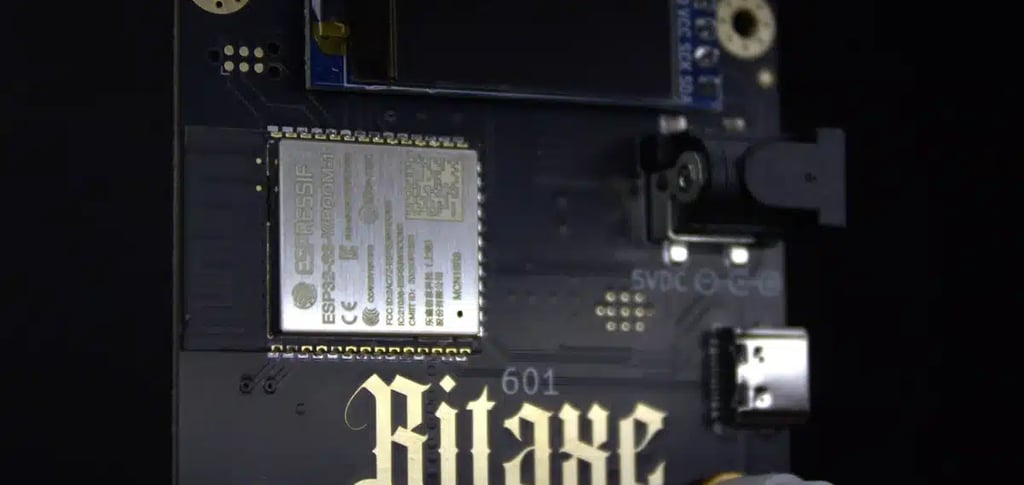
Over the past few months, I’ve been running a small Bitcoin mining setup with two Bitaxe Gamma units, and it’s honestly been one of the more fun things I’ve added to my home lab. What makes these stand out isn’t raw power or profit—it’s how approachable they make mining. Instead of dealing with loud, power-hungry machines, these are small, efficient, and quiet enough to sit on a desk and just do their thing in the background.
Each unit puts out around 1.0 to 1.3 TH/s stock, and with some tuning I’ve been able to push them a bit higher. Combined, I usually see somewhere between 2.6 and 3.2 TH/s, all while only pulling about 30 to 40 watts total. That’s kind of the crazy part—you’re running real ASIC hardware for about the same power as a light bulb.
Running two of them has been a much better experience than just one. Right away, I noticed they don’t behave exactly the same. One of mine handles higher clocks without any issues, while the other is happier running a little lower but stays cooler and more stable. It really shows how much variation there is between chips, even when they’re the same model.
Cooling ended up being a bigger deal than I expected. Just improving airflow a bit made a noticeable difference in stability and performance. At the same time, I learned pretty quickly that pushing for max hashrate isn’t always worth it. Once you start cranking things up, heat and power go up fast, and stability can drop off. Finding a good balance where both units run consistently has been the sweet spot.
I’m currently running on a public pool, which makes things simple and keeps everything consistent. So far, my highest share difficulty has been 7.2G, which was a pretty cool milestone to hit. Moments like that are what make running a setup like this enjoyable—you’re not just passively watching numbers, you’re actually seeing your hardware contribute.
Once everything was configured, the setup has been pretty low maintenance. The web interface is easy to use, and it feels more like managing a small server than traditional mining hardware. That’s also why it fits so well into a home lab. It just runs alongside everything else without taking over your space or your power bill.
Obviously, this isn’t something you run to make money. At around 3 TH/s total, the odds of hitting a block are extremely low. But that’s not really why I’m doing it. It’s more about being involved, learning how the hardware works, and having something tangible that’s connected to the Bitcoin network.
At this point, it’s easy to see how this could turn into a small cluster. Adding a few more units would scale things up nicely without adding much noise or power usage, which is part of what makes the Bitaxe ecosystem so appealing.
Running these two Bitaxe Gammas has definitely changed how I look at mining. It’s taken something that always felt out of reach and turned it into something personal, hands-on, and honestly just fun to run.